
Best Beaches
Best Beaches on the Costa Blanca and Costa Calida
A practical guide to the most loved beaches, with parking, facilities, sand, water quality, and local tips for families and buyers.
Costa Blanca Beach Snapshot
Parking and access
Most main beaches have paid lots or easy street parking, but peak season fills fast.
Sand and water
Expect golden sand, clear water, and gentle waves on family beaches, with coves for snorkelling.
Facilities and Blue Flag
Showers, lifeguards, and Blue Flag status are common in the bigger resorts.
Walk-to-beach living
Many towns offer apartments within a 5 to 15 minute walk of the seafront.
Costa Blanca has dozens of beaches, but the big-name stretches are the easiest for first visits and for anyone thinking about buying near the sea. The coastline mixes long, sandy bays with smaller coves, and the quality is high: many beaches are Blue Flag certified and kept in excellent condition.
What matters most for visitors and residents is the same shortlist: how simple it is to park, the feel of the sand, the clarity and safety of the water, and whether there are restaurants, toilets, showers, and lifeguards in season. The guide below focuses on the most recognizable beach towns so you can picture daily life and understand which areas fit a beach-first lifestyle.
Costa Blanca Beach Gallery
Javea is famous for La Granadella and its smaller coves, where the water is clear and snorkelling is excellent. Parking fills by 10am in July and August, so early arrivals win. Moraira has a relaxed marina feel and the sheltered El Portet bay, popular with families because the water stays calm and shallow near the shore.
Calpe has the long, sandy Arenal-Bol beach with a wide promenade, cafés, and good access from apartments in town. Benidorm is the full-service option: Levante and Poniente are wide, lifeguarded, and packed with facilities. Villajoyosa balances a traditional fishing-town atmosphere with a broad, sandy beach that stays lively but not overly hectic. These towns are the easiest for walk-to-the-sea living, especially if you want shops and restaurants open most of the year.
South Coast and Costa Calida
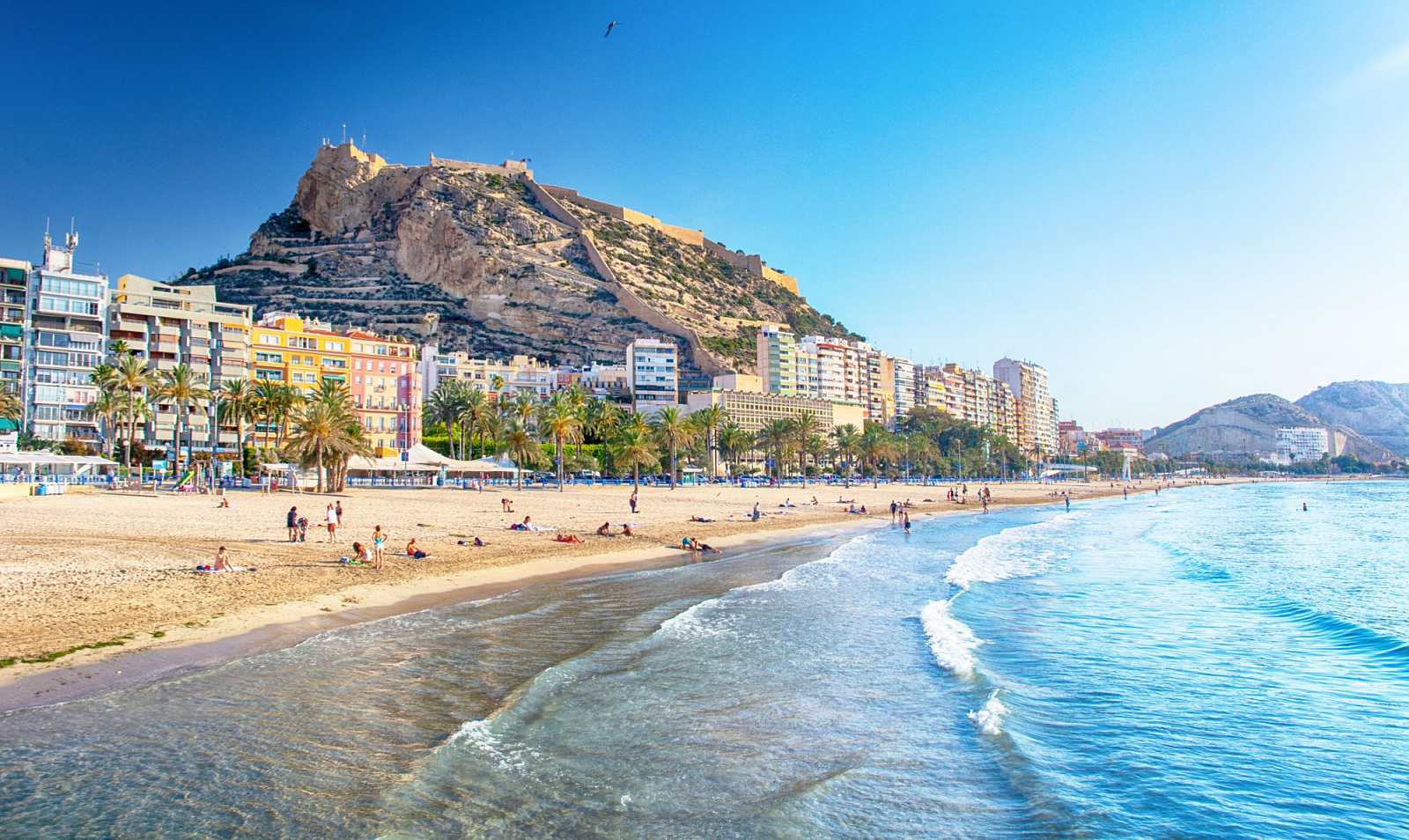
Alicante gives you a true city beach with Playa del Postiguet right below the castle, plus the tram links to El Campello for a long, open beach and easy parking outside peak hours. Santa Pola and Guardamar are reliable family picks with wide sand, showers, and seasonal chiringuitos. La Mata is more natural and open, while La Zenia stays busy thanks to restaurants, lifeguards, and shopping nearby.
Heading south toward Costa Calida, Torre de la Horadada has small coves with calmer water, and Los Alcazares on the Mar Menor is ideal for young children and water sports because the lagoon is shallow and warm. Mazarron is the surprise star: a chain of small bays with their own micro atmospheres, where you can find quiet corners even in summer. The trade-off further south is that some restaurants and beach services close earlier in the year, so the off-season feels quieter and more local.
How Locals Do the Beach
Morning beach (morgenstrand)
Arrive before 10am in summer for easy parking, calm water, cooler temperatures, and a peaceful atmosphere. Perfect for families with young children.
Skip the midday heat
When beaches get crowded and temperatures peak (noon to 3pm), locals head home for lunch and siesta. Tourists often arrive at noon—exactly when you should leave.
Evening beach (kveldsstrand)
Return between 3pm and 8pm when the heat softens, or eat a big lunch at 1-2pm and spend the entire afternoon at the beach. Shower and have a light dinner after.
Off-season bonus
In autumn and winter, midday beach visits work beautifully. Find a sheltered spot, bring a packed lunch, and enjoy genuine beach weather even in December.
Timing separates locals from tourists on the Costa Blanca. In high season, the classic tourist pattern is arriving at noon and staying until 5pm—right through the hottest, most crowded hours. Locals do the opposite: early morning for peace and calm, then home before the crowds arrive, or a late lunch followed by late afternoon and evening at the beach when temperatures drop and the atmosphere improves.
If you are considering a home near the beach, test this rhythm in July and August. Check how parking works early and late, look for Blue Flag signage, and ask whether lifeguards and cafés are open outside the high season. In shoulder and winter months, the midday beach visit becomes the best option—sheltered corners stay warm, and some days feel like pure summer even in November.
Need guidance?
Find a home near your favorite beach
Tell us your beach priorities and we will match you with areas that fit your lifestyle and budget.
Talk to an advisor Buy Property
 11 Popular Places to Buy in Spain
 Buy Property PROPERTIES IN SPAIN
Villas for Sale in Spain | Affordable Villas in the Most Popular Areas
 Buy Property PROPERTIES IN SPAIN
Houses for Sale in Spain | Affordable Properties in the Most Popular Areas
 Buy Property PROPERTIES IN SPAIN