Travel Guide
Discover Costa Blanca North | Jávea, Moraira, Benitachell & Benissa
Your travel guide to Costa Blanca North's finest coastal towns. Explore beaches, old towns, and dining in Jávea, Moraira, Benitachell, and Benissa.

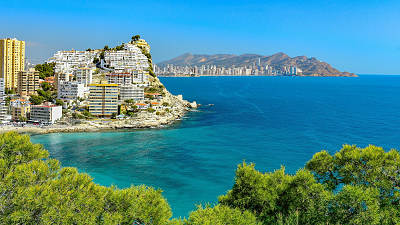
Costa Blanca North is where dramatic cliffs meet turquoise waters, where medieval streets wind past whitewashed houses, and where long lunches stretch into golden evenings.
Unlike the high-rise resorts further south, these four towns have maintained their authentic Spanish character. International residents blend with locals, creating a cosmopolitan yet distinctly Mediterranean atmosphere. Whether you're seeking pristine beaches, historic old quarters, or exceptional Spanish dining, this region delivers.
Jávea: Three Villages in One
Jávea is actually three distinct areas: the historic old town on the hill, the port with its fishing boats and seafood restaurants, and the Arenal beach zone with its lively promenade. This variety makes it endlessly interesting to explore.
The Old Town
Start in the old town, where the fortified Gothic church of San Bartolomé dominates the central square. The narrow streets reveal traditional tapas bars, artisan shops, and quiet plazas where locals gather for morning coffee. Wednesday's market fills the streets with fresh produce, clothing, and local crafts.
The Port
Down at the port, the atmosphere shifts. Fishing boats bob in the harbour, and the waterfront restaurants serve some of the freshest seafood on the coast. Try the local specialty—arroz a banda, a rich rice dish cooked in fish stock.
Arenal Beach
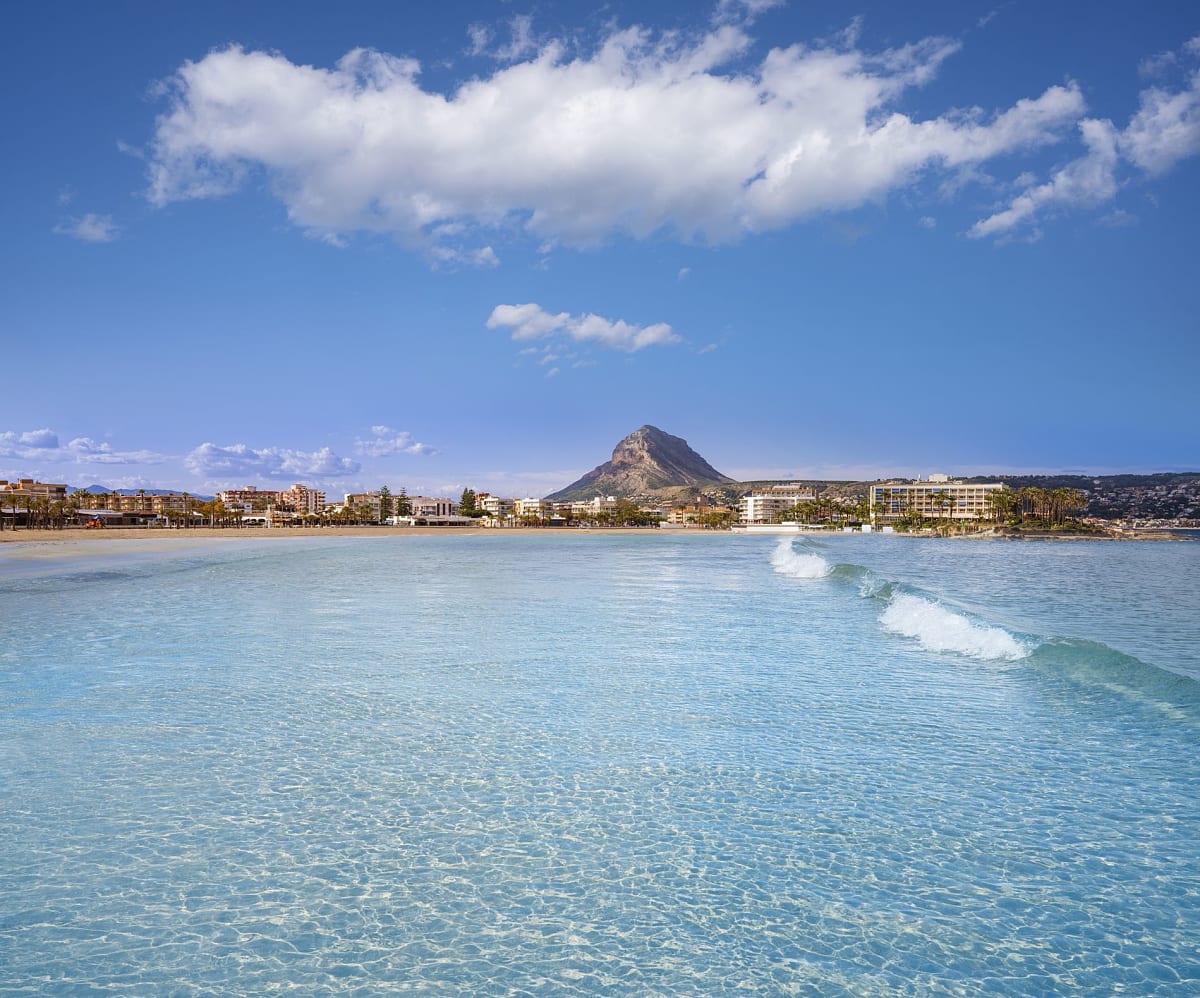
The Arenal is Jávea's main beach—a wide crescent of sand backed by a palm-lined promenade. Cafés, restaurants, and ice cream shops line the waterfront. In summer, the beach buzzes with activity; in winter, it's a peaceful spot for a morning walk.
Beyond the Arenal, dozens of smaller coves dot the coastline. The Cala Granadella regularly ranks among Spain's best beaches—a small bay of crystal-clear water surrounded by pine-covered cliffs.
Old Town
Medieval streets, Gothic church, Wednesday market
The Port
Fresh seafood, fishing boats, waterfront dining
Arenal Beach
Sandy beach, promenade, family-friendly
Hidden Coves
Granadella, Portitxol, crystal-clear waters
Moraira: Understated Elegance
Moraira feels different from the moment you arrive. There's a quiet sophistication here—no high-rises, no mass tourism, just a pretty village that happens to sit on one of the most beautiful stretches of coast in Spain.
The Village Centre
The compact centre is perfect for strolling. Boutiques, art galleries, and excellent restaurants cluster around pedestrianised streets. The 18th-century watchtower—built to defend against pirates—now serves as a scenic landmark overlooking the bay.
Friday morning brings the weekly market, smaller and more manageable than Jávea's but equally atmospheric. Local producers sell honey, olive oil, and seasonal fruits.
Beaches & Coastline
Moraira's main beach, El Portet, is a sheltered bay ideal for swimming and paddleboarding. The water is remarkably calm and clear. Several smaller coves, like Cala L'Andragó and Cala Cap Blanc, offer more secluded options.
Dining Scene
For a town of its size, Moraira punches well above its weight gastronomically. You'll find everything from traditional Spanish cuisine to innovative Mediterranean fusion. The port area is particularly good for sunset drinks and seafood.
This relaxed approach to life is what draws many to consider living on Costa Blanca—the everyday quality that makes a holiday feel like home.
Benitachell: The Authentic Alternative
Benitachell sits on the cliffs between Jávea and Moraira, offering a more authentic experience than its neighbours. The village itself is a working Spanish town, not a resort—though the coastline below is spectacular.
The Village
The compact centre revolves around the church square. Local bars serve inexpensive menú del día lunches, and the pace of life remains distinctly Spanish. Sunday's market draws locals from surrounding villages.
Cala Moraig
The real draw is the coastline. Cala Moraig is a dramatic cove at the base of towering cliffs, accessed by a winding road. The beach is pebbly, the water impossibly blue, and the setting feels almost wild. A sea cave at one end adds to the adventure.
Cumbre del Sol
The Cumbre del Sol urbanisation spreads across the clifftops, home to many international residents. The views from here—across to the Peñón de Ifach and along the coast—are among the best in the region.
Benitachell offers a balance: authentic Spanish village life combined with easy access to beaches and a strong international community. It's particularly popular with those seeking a quieter Spanish lifestyle away from tourist centres.
Benissa: History Meets the Sea
Benissa is often overlooked by visitors, which is precisely its appeal. The historic centre is one of the best-preserved on the coast, while the scattered coastal area offers a string of beautiful coves.
The Old Town
Benissa's old town is a maze of narrow streets, noble houses, and hidden plazas. The Gothic church, several centuries old, anchors the historic quarter. Unlike more touristy old towns, this one feels genuinely lived-in—locals outnumber visitors, and the shops cater to residents rather than tourists.
Saturday's market is a local affair, with fresh produce, flowers, and household goods spread through the streets.
The Coastal Strip
Benissa's 4km coastline is a series of small coves rather than one main beach. Cala Baladrar, Cala Pinets, and Cala Llobella each offer something different—some rocky, some sandy, all beautiful. A coastal walking path connects them, making for an excellent morning hike.
Food & Wine
The inland location means Benissa has a strong agricultural tradition. Local restaurants serve hearty mountain cuisine alongside seafood. The surrounding vineyards produce wines under the Alicante denomination—worth seeking out.
Getting Around
While each town is walkable, you'll want a car to explore the region properly. The coastal road between these four towns is scenic and straightforward, with most journeys taking 10-15 minutes.
By Car
Without a Car
When to Visit
Costa Blanca North enjoys mild weather year-round, but each season offers something different.
Summer (Jun-Sep)
Beach season, lively atmosphere, book restaurants ahead
Autumn (Oct-Nov)
Warm seas, fewer crowds, perfect hiking weather
Winter (Dec-Feb)
Mild days, quiet towns, local festivals
Spring (Mar-May)
Wildflowers, almond blossom, ideal temperatures
Many visitors who come for a week end up returning year after year. Some eventually make the move to buy property here—drawn by the quality of life, the climate, and the sense of community that develops over time.
Ready to Explore?
Find Your Place on Costa Blanca
Whether you're looking for a holiday home or a permanent move, we can help you find the right property in these beautiful towns.
View Properties