Gated Communities
Gated Communities in Spain for Retirees
Gated communities in Spain can suit retirees, but only if fees, winter occupancy, healthcare access, and year-round facilities stack up.
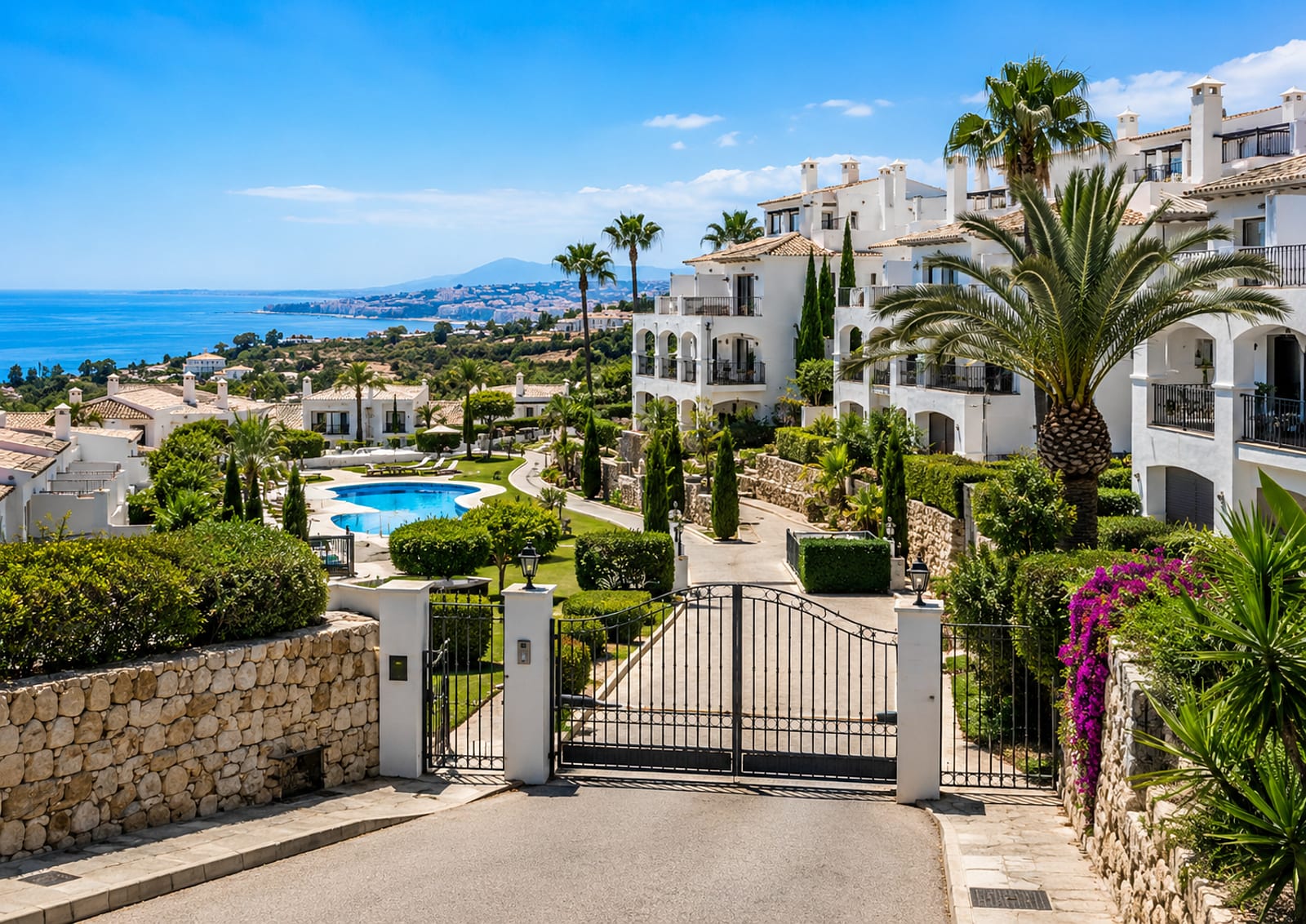
Test the Community in Winter

A gated community can look perfect in June: trimmed gardens, busy pool, open restaurant, reception desk, neighbours chatting after golf. Buy on that picture alone and January can feel very different. The same community may have dark apartments, a closed gym, no evening activity, and only a few permanent residents.
For retirees planning a permanent move to Spain, that difference matters more than the size of the terrace. You are buying daily life, not a holiday brochure. The right gated community can give you security, lighter maintenance, social contact, and predictable surroundings. The wrong one can leave you isolated inside a well-kept resort.
In Spain, a gated community usually means controlled access, private roads, shared facilities, and management through the Comunidad de Propietarios, or Community of Owners. Some are small residential complexes with a pool and gardens. Others are resort-style developments with concierge desks, gyms, restaurants, golf, or spa facilities. Before signing, visit in October or January and ask how many owners actually live there all year.
Why Retirees Choose Them
Security
Controlled access, lighting, cameras, and neighbours nearby can make daily life feel calmer.
Social Contact
A resident community can mean coffee groups, walking clubs, pool conversations, and help nearby.
Healthcare Access
Many coastal communities sit near private clinics, pharmacies, dentists, and English-speaking services.
Shared Upkeep
Pools, gardens, lifts, insurance, cleaning, and security are paid collectively instead of managed alone.
The appeal is practical. You don't have to maintain a private pool, negotiate with gardeners, or worry as much if you spend a month visiting family abroad. Community rules can protect standards by limiting exterior changes, noise, parking misuse, and poorly managed holiday rentals.
That structure suits many older buyers, especially those moving from a detached house to an apartment, bungalow, or townhouse. It can also make property management easier for adult children abroad, because there is a formal administrator and a known set of costs.
The social side is the part buyers should test hardest. Ask residents what happens on a normal Tuesday in February. Are there permanent neighbours? Are activities organised by owners, or only by a resort operator in high season? A full pool in August tells you little about winter friendship.
Community Fees and Extra Bills
Community fees vary by location, property size, lifts, gardens, pool count, security, concierge, private roads, gyms, spas, irrigation, administration, building insurance, repairs, and reserve funds. Costa del Sol and Costa Blanca gated communities often sit around EUR 100-300 per month, while luxury golf resorts can run EUR 300-600+ per month. The facilities you enjoy are the facilities you pay for.
Retirees on fixed income should ask for the exact monthly or quarterly fee in writing, not a verbal estimate. Then ask whether fees have increased over the past five years, by how much, and whether the next budget has already been approved. Use the Annual costs calculator to test the fee against pension income before you reserve the property.
Special assessments are the bigger surprise. These are extra owner charges for major works: pool repairs, lift replacement, roof work, facade repairs, security upgrades, road resurfacing, landscaping, or legal disputes. Your lawyer should read the community meeting minutes and ask in writing: have any special assessments been approved or discussed in the past three years? Pair that with the normal legal checks in our Spanish buying legal guide.
Rules, Services, and Red Flags
Good Signs for Permanent Living
Red Flags for Retirees
Community statutes can affect daily life. They may limit short-term rentals, pets, noise, pool hours, parking, exterior paint, satellite dishes, air-conditioning units, awnings, garden changes, renovation hours, holiday guests, or business use from home. A rule that sounds minor during viewing can matter when grandchildren visit for three weeks or when you want a dog.
Healthcare access deserves its own line of due diligence. Ask which private clinic residents use, whether it opens year-round, and how long an ambulance usually takes from the gate. Check the nearest pharmacy, dentist, supermarket, and taxi service in winter opening hours. A community 10 minutes from a clinic feels different from one 45 minutes up a hillside when you no longer want to drive at night.
Visit twice if the property is a serious contender: once in good weather and once outside the main season. Speak to permanent residents without the agent present. Ask what they wish they had checked. That conversation is often more useful than any facilities list.
Questions to Ask Before Buying
Ask Who Lives There Year-Round
Request an estimate of permanent residents, holiday homes, and rental properties. Then check it during an off-season visit.
Ask for Fees, Budgets, and Minutes
Get the current fee, five-year fee history, approved budget, reserve fund, unpaid debts, and three years of meeting minutes.
Ask Which Services Stay Open
Confirm winter opening for pool, gym, restaurant, reception, security, pharmacy, taxi service, and nearby healthcare.
Ask for the Rules Before Reservation
Read the community statutes before paying a deposit, especially if you have pets, mobility needs, regular guests, or renovation plans.
The best purchase is usually the one where the answers feel boring: stable fees, clean accounts, known neighbours, year-round services, and rules you can live with. If the seller or agent cannot provide documents, slow down. A gated community can be an excellent retirement base in Spain, but only when the community itself fits your life as closely as the property does.
For the wider buying process, compare this checklist with our guide to buying costs and taxes and our healthcare in Spain guide. The property may be beautiful, but the winter rhythm, fee record, and clinic access decide whether it works as a permanent home.
Buying for Retirement?
Shortlist Communities That Work in January
Before you book viewings, define your fee ceiling, healthcare radius, transport needs, and winter social expectations.
Plan Your Property ShortlistTalk to a local broker
We live and work on Costa Blanca North — Jávea, Dénia and the towns around our office. We are a licensed estate agency, not only a guide: homes on our books, trusted partners for banking, legal, currency and other locations when you need them. Tell us where you are thinking of moving. No property shortlist required. We will help you find a sensible next step.
Talk to us