Jávea vs Dénia Guide
Jávea vs Dénia: Two Markets, One Coastline
Jávea commands a premium. Dénia offers value. A data-driven comparison of two distinct property markets on Costa Blanca North.

Two Markets, One Coastline
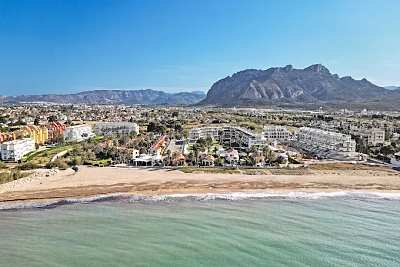
Jávea and Dénia sit 10 kilometres apart on the Costa Blanca North, connected by the AP-7 and a shared stretch of coastline around the Montgo massif. The proximity can be misleading. These are two distinct property markets with different price floors, buyer demographics, and growth trajectories.
Jávea's average price per square metre for quality villas and sea-view apartments sits around €3,500–4,200/m². Prime locations like Portichol and Balcon al Mar regularly exceed €5,000/m². The premium is structural: limited buildable land between the Montgo and the coast, a mature international community (predominantly British, German, and Scandinavian), and a reputation that feeds itself.
Dénia is larger (42,000 residents vs Jávea's 27,000) and has an economy that doesn't depend entirely on tourism. The old town, the fishing port, weekly markets: these run year-round. Luxury properties here range from €2,400–3,200/m², and you'll find villas on larger plots with comparable views for 25–30% less.
According to Idealista data, Jávea has seen roughly 35–40% price growth since 2021. Dénia is closer to 25–30%. The gap has widened, not narrowed.
Jávea's three zones (the old town, the port, and Arenal beach) create a dispersed layout. You'll need a car for most things. Dénia has a compact, walkable centre and a tram connection running south to Alicante via Benidorm. For buyers who value daily convenience over exclusivity, that infrastructure gap matters.

Which Town Fits Your Profile
Jávea
Dénia
An investor with a €500k budget faces a clear split. In Jávea, that money gets a 2–3 bedroom apartment in a good urbanisation or a dated villa needing work. In Dénia, the same budget buys a modern 3-bedroom villa with a pool, or two apartments with rental income potential. If yield is the priority, Dénia stretches further. Rental yields in Dénia's tourist-oriented areas typically run 5–7% gross for well-managed holiday lets, while Jávea's higher entry prices push yields closer to 3–5%, offset by stronger capital appreciation.
For retirees, Jávea's appeal is the established expat network: English-speaking doctors, social clubs, familiar faces at the Arenal Saturday market. Dénia gives you more interaction with Spanish daily life. A working fishing port, a proper town centre, fewer tourist-only businesses. It feels more like living in Spain, less like living in an international enclave. The question is what kind of retirement you're after.
Remote workers and young families tend to land in Dénia. Newer builds, better broadband coverage in urban areas, and a lower cost of living make it the more practical choice. Dénia also has a wider selection of schools, with international options accessible in the surrounding area. For a first-time buyer weighing both towns, the honest answer is that Dénia offers more property for the money and a lower barrier to entry. Jávea rewards those who can pay the premium with stronger long-term value retention.

For a closer look at both towns and their property markets, this walkthrough covers the ground:
Neighbourhoods Worth a Second Look
Both towns have well-known premium zones: Portichol and Balcon al Mar in Jávea, Las Rotas in Dénia. The more interesting opportunities sit in areas where fundamentals are strong and prices haven't caught up. These neighbourhoods won't stay under the radar indefinitely, but for now they offer genuine value relative to the prime zones.
La Lluca, Jávea
Residential area inland from Arenal beach. Prices sit 20–30% below coastal urbanisations, but you're still a 10-minute walk to the sand. Growing appeal among permanent residents who want proximity without the seafront premium.
Cap Martí, Jávea
Elevated position south of the port with panoramic sea views. Less foot traffic than Tosalet or Balcon al Mar keeps prices accessible. Road infrastructure improved recently.
Las Marinas North, Dénia
Dénia's long beach strip stretches for kilometres. The northern sections beyond the main tourist zone are less developed and priced 15–20% lower. New construction is starting to appear, and proximity to the town centre keeps these areas practical for year-round living.
Montgo (Dénia Side)
The Dénia slopes of Montgo have large plots with mountain and partial sea views. Significantly cheaper than the Jávea side, with similar natural surroundings and protected parkland.
If you're considering either town, a structured viewing trip is the best way to see these areas firsthand. The differences between neighbourhoods are hard to appreciate from listings alone. Walk the streets at different times of day, talk to local agents, check the parking situation in August. Before committing, review the costs and taxes. Transfer tax, notary fees, and legal costs add roughly 10–13% on top of the purchase price in the Valencia region.
New Builds in Dénia
Next Step
Plan Your Viewing Trip
See both towns firsthand. A structured viewing trip is the best way to understand what each market actually offers.
Read the Guide