Nationality Map
Costa Blanca by Nationality: Who Lives, Who Buys
A 2025-26 look at where Britons, Dutch, Belgians, Scandinavians, and others actually live and buy along the Costa Blanca and Costa Calida.

Where the Numbers Come From
Some Costa Blanca towns have well-known British or Scandinavian communities. Others are quietly being bought up by Dutch, Belgian, or Polish purchasers right now. Resident data and buyer data tell different stories, and both are useful when you choose a town.
Two figures matter when you research where to live in Spain. Resident data shows who already lives in a municipality, the established community you'd see at the Sunday market or the school gate. Buyer data shows who has signed at the notary recently, which is a better indicator of where new arrivals are landing.
The two often disagree. A town can have a long British resident base while 2025 transactions are dominated by Dutch and Belgian purchasers. That gap matters if you're hoping to find neighbours from your country: do you want to walk into an established group, or be part of a newer wave?
One nuance worth flagging. The notary council and the property registry publish different headline figures because they record purchases at different points in the legal process. For Alicante province in 2025, notarial data put the foreign share of home sales at 51.5%, while registry data sat closer to 43%. Treat them as honest measures of the same market, not as a contradiction. The Murcia region's foreign share in 2025 was much lower at around 20.7%, which is part of why Costa Calida feels less international on the ground.
Torrevieja and Orihuela Costa
Torrevieja is often described in shorthand as "the British town", and it isn't really. At the start of 2026 it had over 110,500 residents, of whom 59,205 were foreign nationals. The largest groups were Ukrainians, Russians, Colombians, Britons, and Moroccans, a mix shaped by decades of arrivals from very different places.
The 2025 buyer picture looks different again. Polish, Swedish, Ukrainian, German, Belgian, British, and Dutch names dominated the foreign share of notarial purchases in the first half of the year. If you're moving from Warsaw or Stockholm and want neighbours who've recently been through the same paperwork, Torrevieja is currently the most likely match on the south coast.
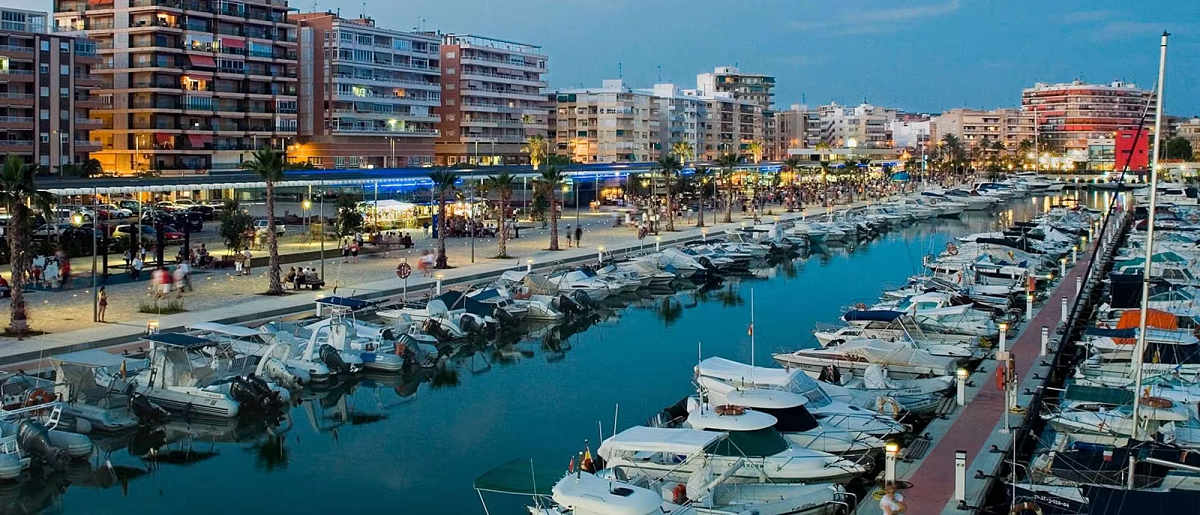
Orihuela Costa is the other case worth knowing in the south. The municipality reported 30,171 residents in this coastal district at the start of 2026, with British residents the largest group, ahead of Spanish and Ukrainian. Sub-municipal buyer data is patchier than for full municipalities, but the established community signal is unusually clear: this is one of the most British-influenced strips on the Spanish Mediterranean. Practical considerations like community fees in resort urbanisations, year-round versus seasonal services, and the IBI rates set by Orihuela town hall matter as much here as the nationality mix when you compare specific developments around Punta Prima, Cabo Roig, or Playa Flamenca.
Mar Menor: A Different Mix
Cross the regional border into Murcia and the picture changes. The Mar Menor towns of San Javier and Los Alcazares are not classic Northern European enclaves. Foreign residents in San Javier are dominated by Moroccan, Ecuadorian, and British communities; in Los Alcazares the order is similar, with Moroccans first, then Britons and Ecuadorians. This is partly a labour-migration story and partly a holiday-home story, and it sits alongside a Spanish year-round population that is much more dominant than in Torrevieja or Calp.
Buyer data for individual Calida towns is thinner than for Alicante, so it's safer to use regional Murcia figures as context: foreign buyers were around 23.6% of regional purchases in 2024 and 20.7% in 2025. Costa Calida is meaningfully cheaper than Costa Blanca, but the international buyer mix is narrower. If "people from my country already live here" is high on your list, treat the south Calida coast as a value play first and a community match second.
Benidorm to Denia
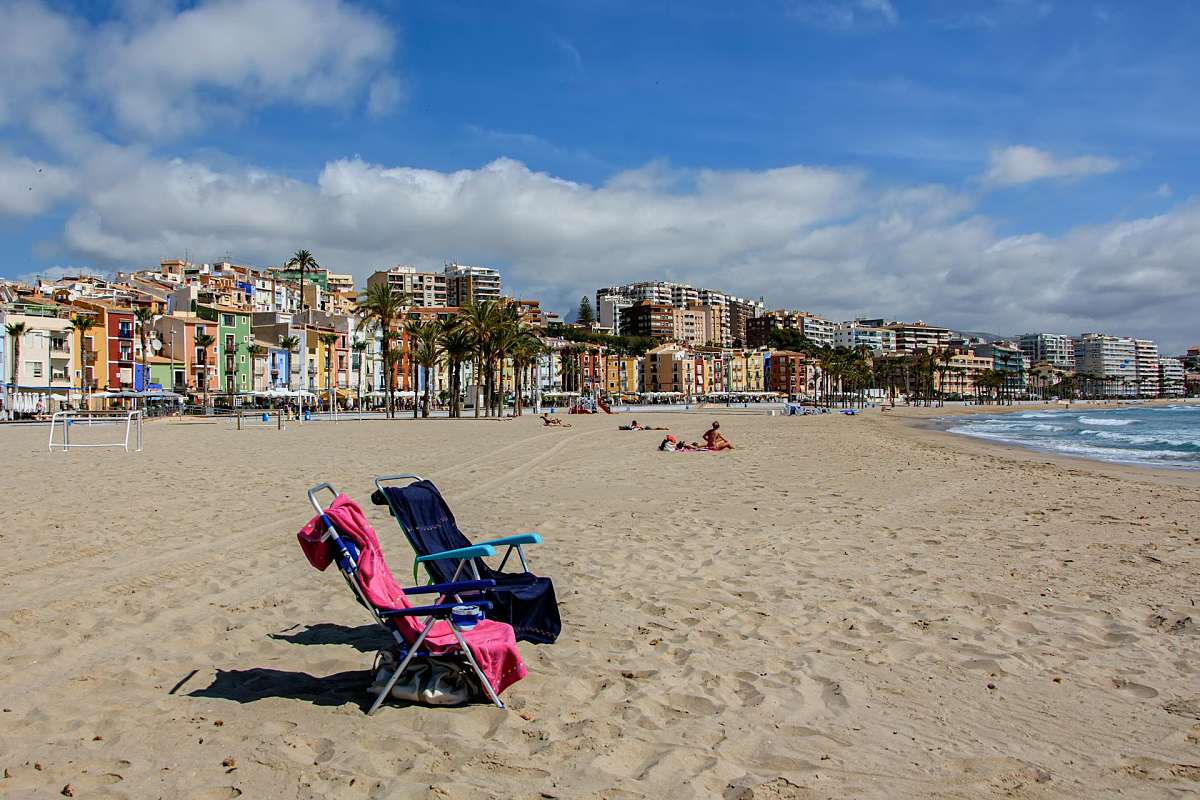
The middle coast (Benidorm, l'Alfas del Pi with Albir, Altea, Calp) has the widest spread of nationalities of any stretch in the country. Benidorm in 2025 had Britons, Colombians, and Romanians as the largest foreign resident groups, while the first half of 2025 brought Dutch, Ukrainian, Romanian, and Polish buyers in greater numbers than British ones. l'Alfas del Pi and its coastal district Albir form the clearest Scandinavian cluster on the coast: Den Norske Skole Costa Blanca alone had over 270 pupils in 2025, and Norwegian buyers were the second-largest foreign group there in H1 2025, behind the Dutch. Calp passed 54% foreign residents in 2025, with Belgian, Dutch, and German purchasers leading recent transactions.

The northern micro-corridor of Benitachell, Teulada/Moraira, Javea, and Denia is where the resident-versus-buyer gap is sharpest. Benitachell is around 62% foreign and clearly British on residents, anchored by Lady Elizabeth School in Cumbre del Sol. Teulada/Moraira and Javea read as British in casual visits, but H1 2025 transactions show Dutch buyers ahead of Britons in both. Denia is the most urban of these towns and has a sizeable Colombian and Argentinian community alongside Britons; recent foreign purchases come mainly from the Netherlands, Germany, the UK, and Poland.
| Town | Top resident groups | Top 2025 foreign buyers | Read |
|---|---|---|---|
| Torrevieja | Ukraine, Russia, Colombia, UK | Poland, Sweden, Ukraine, Germany | Multinational, high-volume |
| Orihuela Costa | UK, Spain, Ukraine | Mainly British (sub-municipal data limited) | Established British base |
| L'Alfas / Albir | UK, Romania, Germany + Scandinavians | Netherlands, Norway, Belgium | Scandinavian identity, Dutch-led purchases |
| Calp | UK, Romania, Germany | Belgium, Netherlands, Germany | Benelux and German buyer wave |
| Altea | UK, Romania, Russia | Netherlands, Belgium, UK | Quietly Benelux now |
| Teulada / Moraira | UK, Germany, Morocco | Netherlands, UK, Belgium | British base, Dutch-Belgian purchases |
| Javea | UK, Colombia, Morocco | Netherlands, UK, Belgium | British and Latin American base, Dutch wave |
| Denia | Colombia, UK, Argentina | Netherlands, Germany, UK, Poland | Mixed, increasingly Northern European |

Putting both data sets together: Britons looking for an established community fit best in Orihuela Costa, Torrevieja, Teulada/Moraira, and Javea. Dutch and Belgian buyers are most active in Calp, Moraira, Javea, and Denia. Scandinavians have the strongest existing infrastructure around l'Alfas del Pi and Albir. Eastern European buyers (Polish, Ukrainian, Russian) concentrate in Torrevieja and Benidorm, where the resale apartment supply is deeper. None of this should outweigh budget, transport, healthcare access, schools, community fees, IBI, or short-term rental rules; nationality is one filter, not the main one. For a property around €350,000 in this corridor, you can calculate buying costs before viewing trips, and the Costa regions buyers guide covers price differences between north, south, and Calida in more detail.
Picking your area
Compare Areas Before You View
Use our regional and first-time buyer guides to filter towns on price, lifestyle, and buyer mix before you book viewings.
Read the regions guide