Due Diligence
Property Due Diligence in Spain
Nervous about buying in Spain? Use this practical due diligence checklist to verify ownership, debts, licences, contracts, and costs before signing.
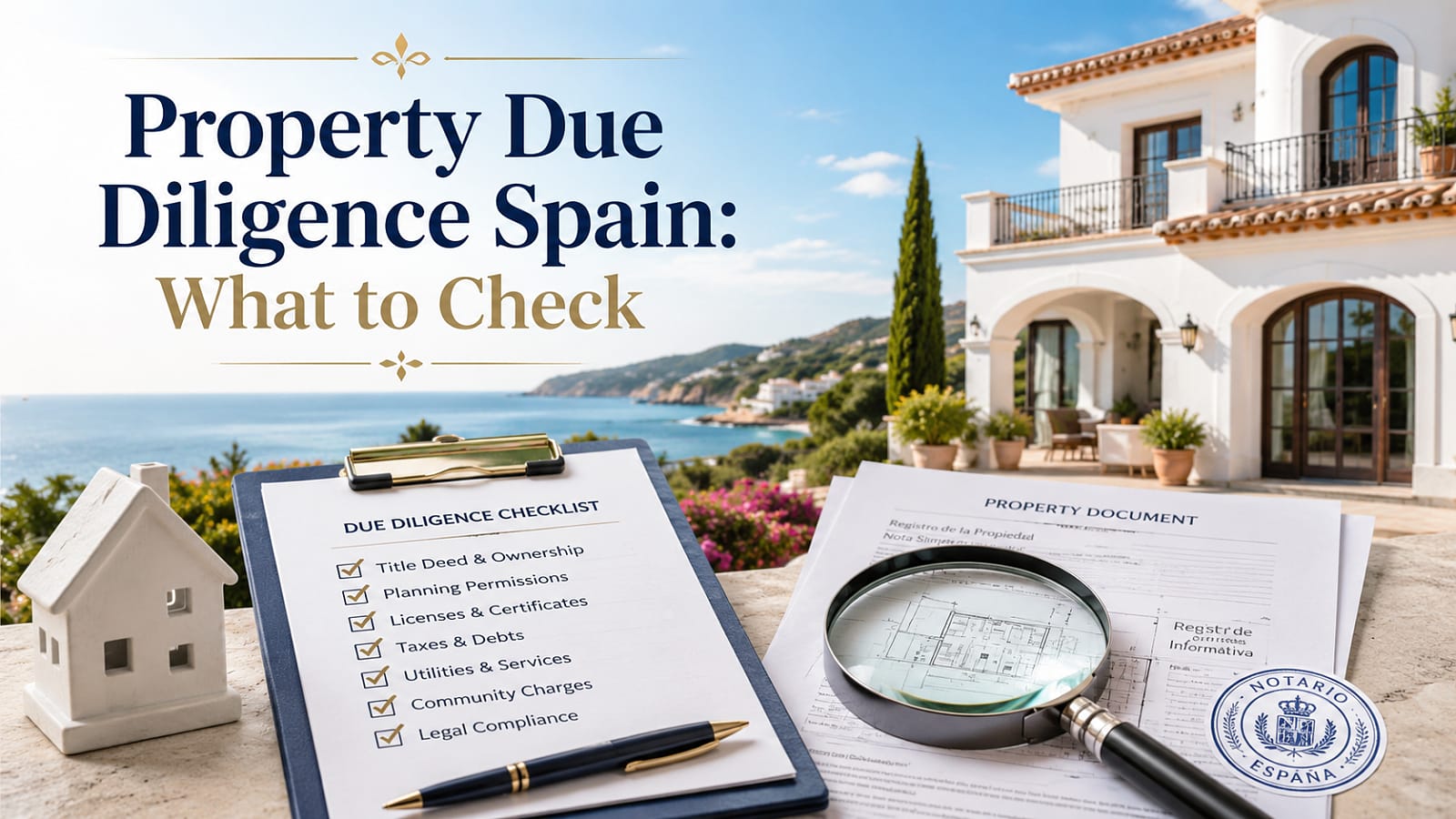
What Due Diligence Means
Buying in Spain is manageable when the checks happen before money and signatures.
Spain is a well-regulated property market, but that does not remove the buyer's job: verify the property before signing a reservation contract, paying an arras deposit, or reaching the notary.

Property due diligence means checking that the seller can legally sell, the property is correctly registered, debts will be cleared, licences are in order, and the home suits your intended use. It is practical work, not mystery. You collect documents, compare them with the real property, and ask your independent Spanish lawyer to confirm the risks in writing.
This guide is not legal advice. It is a buyer's map of what to ask before committing. If you are new to the process, read it beside our first-time buyer guide and the legal requirements guide.
The Core Checks
Verify the Seller
The seller's name and ID must match the Land Registry record. If an inheritance, company sale, or power of attorney is involved, your lawyer should confirm authority before you pay.
Read the Nota Simple
The Nota Simple shows ownership, mortgages, embargoes, rights of way, and registry restrictions. Use our Nota Simple guide for the document-by-document detail.
Match the Description
Compare the registry, cadastre, plans, and the real property. Extra rooms, enclosed terraces, pools, or garages may need regularisation before purchase.
Check Debts and Charges
Mortgages, embargoes, IBI arrears, community debts, utility debts, and tax charges must be identified and cleared or retained from the sale price at completion.
Confirm Planning Legality
Ask about building licences, first occupation licence, planning compliance, and extensions. This matters most for villas, rural homes, older properties, and renovated resales.
Review the Community
For apartments and urbanisations, check community fees, debts, rules, rental limits, planned works, reserve funds, and meeting minutes.
Check Rental Rules
If you plan short-term lets, confirm regional, municipal, and community rules before you buy. Do not rely on the seller's rental income promise.
These checks connect to each other. A clean Nota Simple does not prove that a pool is legal. A strong rental history does not prove that future tourist letting is allowed. A low price does not prove value if the community has a large repair vote pending.
For deeper reading, start with our Nota Simple guide, the article on what a property lawyer checks, and the guide to buying property with debt in Spain.
When to Stop
Investigate Before Moving On
Pause the Deal
A red flag is not always a permanent no. It is a reason to stop the clock. Many issues can be fixed before completion: a mortgage can be cancelled, community debt can be deducted from the seller's proceeds, and an old document can be replaced with a fresh certificate.
The danger is signing first and investigating later. Reservation contracts and private purchase contracts can set deadlines, penalties, and deposit rules. Before you transfer money, your lawyer should check refundability, conditions, finance clauses, completion dates, fixtures included in the sale, and what happens if the seller cannot deliver clean title.
If you need a wider view of the signing stages, use the buying process guide. If finance is involved, also check the finance guide before accepting contract wording that leaves you exposed if a bank valuation or mortgage approval fails.
Your Buyer Checklist
| Check | Status |
|---|---|
| Independent lawyer appointed | [] |
| Recent Nota Simple checked | [] |
| Seller ownership verified | [] |
| Debts, mortgages, and charges checked | [] |
| IBI, utilities, and community fees checked | [] |
| Planning legality and licences checked | [] |
| Tourist rental rules checked if relevant | [] |
| Survey considered for older, rural, or villa purchases | [] |
| Running costs reviewed | [] |
| Purchase contract reviewed before payment | [] |
Legal checks are only one part of due diligence. Also test the purchase against everyday affordability: IBI, community fees, insurance, utilities, maintenance, non-resident tax, property management, and currency costs. For purchase taxes and fees, read our costs and taxes guide.
For villas, older homes, rural properties, and anything with visible alterations, consider an independent survey. A lawyer checks legal status. A surveyor checks condition. Both matter when the wrong repair can cost more than the deposit.
Before You Sign
Get the Legal Checks Done First
If a property looks right, slow down long enough to verify it. Independent advice before signing is cheaper than fixing ownership, debt, or licence problems later.
Speak to a Lawyer