Javea guide
Javea from the old town to the Arenal
Compare Javea's old town, port, Arenal and villa areas, including 2026 prices, February life and airport access before choosing where to buy.

Choose the postcode first
Old town
Tosca-stone streets, the indoor market and townhouses about 2 km inland from the sea.
The port
A working waterfront with apartments, year-round restaurants and the easiest coastal life without a car.
The Arenal
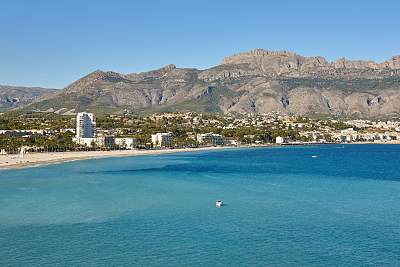
Javea's sandy beach, a broad promenade and the strongest concentration of holiday apartments.
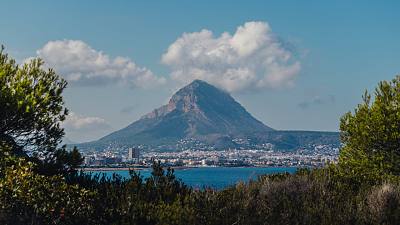
Javea asks you to choose a neighbourhood before you choose a home. The old town, port and Arenal are separate centres, with villa urbanisations spread between the Montgo slopes and Cabo de la Nao. A listing can say Javea while putting you 15 minutes by car from the routine you pictured.
The old town is the most Spanish of the three centres. Around the church of Sant Bartomeu and the municipal market, narrow streets lead to townhouses, cafés and daily services. The port has a flatter, more coastal routine: morning swimmers at La Grava, fishing boats beside the marina and restaurants that keep serving after summer. The Arenal is livelier and more international, with the only broad sandy beach in town and the easiest setup for visiting family.
That variety is Javea's advantage over smaller neighbours. It is also the trap. A sea view on the capes normally means driving for bread; an Arenal apartment puts the promenade outside but brings August traffic. Start with the weekday you want, then compare homes inside that area.
What the price buys
Engel & Völkers' August 2026 Xabia data, based on property-portal listings, puts apartments at about €3,325 per m² and houses at about €3,684 per m². Treat those as town-wide asking-price indicators, not a valuation. A renovated Arenal flat with a sea view can sit well above the apartment figure. A large older villa without modern heating may sit below the house figure and still cost more after the work is done.
Price per square metre also hides the cost of land. A villa's pool, retaining walls, driveway and garden add value without adding much built area, so its ratio can look high beside a flat. Compare like with like, then have a surveyor inspect extensions and outdoor structures. In older villa zones, the covered terrace, extra bedroom or pool shown at the viewing may not match the registered description.
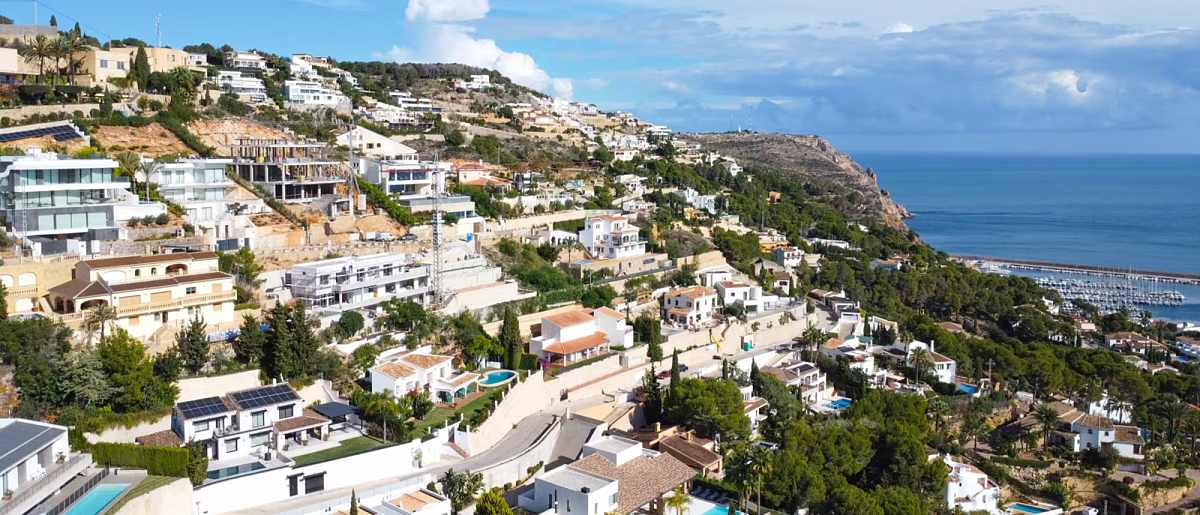
For villa buyers, Tosalet is the useful sweet spot. It is an established urbanisation rather than a remote collection of hillside roads, with mature gardens, traditional covered nayas and a short drive to the Arenal. Older houses often need kitchens, windows or efficient heating, but the area gives you a settled address without paying La Corona prices for a panoramic view.
Apartment buyers should look closely at the port if the home will be used in winter. The Arenal has more holiday stock and a stronger summer rental rhythm; the port has more ordinary errands on foot. For current listings and a map of the municipality, use our Javea area page.
The February test
Visit in February before buying for year-round use. Beaches are quiet, parking is easier and the difference between a residential street and a holiday strip becomes obvious. Some seasonal restaurants take a winter break or reduce their hours, especially around the Arenal. The port and old town keep a steadier local rhythm.
Use that visit for ordinary tests. Drive home after dinner, buy groceries without taking the scenic route and listen for road noise with the terrace doors open. In a hillside urbanisation, check mobile reception and the distance to bins as well as the sea view. In an apartment block, ask how many neighbours live there all year and when the community last approved major facade or lift work.
For a regional climate benchmark, AEMET's long-term Alicante normals show a February average daily high of 17.6°C, an average low of 7.1°C and about 180 hours of sunshine. Javea can feel warm on a sheltered terrace at lunch and cold inside an unheated villa after sunset. Test the orientation, look for damp and ask how every room is heated. A south-facing naya is more useful in February than a sales brochure can show in August.
A car remains the practical default outside the three centres. Alicante-Elche Airport is roughly 100 km away and normally takes about 75 minutes by the AP-7 when traffic is moving. Valencia Airport gives a second set of routes but is usually closer to 90 minutes. There is no railway station in Javea, so check the full trip from your front door rather than the distance on a map.
Compare the neighbours
Javea fits
Look next door
Dénia is about 10 km north across the Montgo and feels more like a working small city, with a castle, ferry port and long sandy beaches. Read why Dénia can be the stronger all-round buy when entry price and year-round infrastructure lead the decision.
Benitachell sits inland between Javea and Moraira. It has fewer walkable coastal streets, but villa buyers can gain plot size and sea views for less money; our Benitachell property guide explains the village and Cumbre del Sol. If the final choice is between two polished coastal towns, the Javea and Moraira comparison covers the difference in scale, supply and daily life.
Give each town an ordinary weekday, not a lunch stop. Buy in Javea when its range of neighbourhoods solves more problems than it creates, and when the exact address still works in February.
Test the weekday
See three sides of Javea
Compare the port, Arenal and Tosalet on the same viewing trip, including the routes you would use for groceries and the airport.
See homes in JaveaTalk to a local broker
We live and work on Costa Blanca North — Jávea, Dénia and the towns around our office. We are a licensed estate agency, not only a guide: homes on our books, trusted partners for banking, legal, currency and other locations when you need them. Tell us where you are thinking of moving. No property shortlist required. We will help you find a sensible next step.
Talk to us